




Tel: 0207 0181480

CNC Prototyping, Manufacturing and Testing
From first concept to finished part, London Machine Works provides CNC prototyping, fabrication and testing for engineering clients across the UK. We’re based in Farnborough, Hampshire, and make one-off prototypes for fit and function checks, rapid prototypes in hours or days, and parts for low- and high-volume production. Design, machining, fabrication, finishing and testing are all handled by one engineering team, so you work with the same people from drawing to delivered part.
CNC Prototyping Services in the UK
A machined prototype lets you check form, fit and function in the real material before you commit to a larger order. Our CNC machining and turning work covers one-off prototypes through to low- and high-volume production, so the part you approve can go on to production. We work to tight tolerances on complex parts, for industries including engineering, defence, medical technology, aerospace, automotive and robotics.
- Processes: CNC machining and turning, fabrication and welding, SLA and carbon fibre 3D printing
- Materials: we can machine any material, from aluminium to titanium and Inconel
- Lead times: smaller CNC machined parts and fabrication work typically within 2–3 days; 3D printed structural parts and tooling within a day or so, sometimes within hours. Larger or more complex work depends on size and complexity.
- Quantities: from one-off prototypes to low- and high-volume production
- What to send us: drawings in any 2D or 3D format, including PDFs, STEP, IGES, DWG/DXF and native CAD files, or a physical sample
Not sure if CNC is the right route? We’ll advise. CNC machining gives you the properties of the production material. SLA and carbon fibre 3D printing can be faster for early prototypes, tooling and complex, lightweight geometries.
From Prototype to Production: How We Work
1. Design and engineering review
We start with your drawing, CAD model or sample. If you need design input, our engineering design team models parts in SolidWorks, Creo and Siemens NX, and produces drawings to BS 8888. Where needed, we run tolerance stack analysis and advise on material selection. If you only have a physical part, we can 3D scan it (accurate to 0.1 mm) to create a digital model for reverse engineering.
2. Rapid prototyping
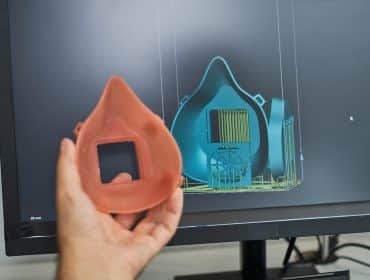
For early design checks, tooling and structural parts, our SLA and carbon fibre 3D printers can produce parts within a day or so, and sometimes within hours.
3. CNC machining and turning
Parts are machined to drawing in materials from aluminium to titanium and Inconel. This works for both low- and high-volume production, so a prototype can move to batch manufacture without starting again.
4. Fabrication, welding and finishing
Where a project needs structural components, frames or assemblies, our fabricators and welders build them alongside the machined parts. Parts can then be spray painted and finished to your specification.
5. Testing and verification
We check designs and parts against the design intent using analysis, 3D scanning and, for rotating assemblies, dyno testing. See Prototyping and Testing below.
6. Delivery, installation and commissioning
Most assemblies are built in our own facility, then delivered and commissioned on site. For larger projects, we can also manufacture and commission on site.
Prototyping and Testing
A prototype is only useful if it tells you something. We combine analysis with physical testing, so that design problems show up before production and performance can be tracked once parts are in service:
- Simulation before manufacture: FEA (Finite Element Analysis) and CFD (Computational Fluid Dynamics) in ANSYS. These predict performance under real-world conditions, so designs can be refined before metal is cut.
- Hand calculations: independent hand calculations to verify key aspects of the design and to cross-check FEA and CFD results.
- Dimensional inspection: high-resolution 3D scanning, accurate to 0.1 mm, to compare finished parts against the design model.
- Dyno testing: dynamometer testing of rotating assemblies to confirm performance before they go into service.
- Condition monitoring: for parts and equipment already in service, our condition monitoring service tracks how they perform over time.
Results go back into the design, so each version moves closer to a part that is ready for production and reliable in service.
-
3D Carbon Fibre Printing
Our advanced 3D carbon fibre printing service allows us to produce strong, lightweight components with incredible precision. Carbon fibre materials are favoured for their high strength-to-weight ratio, making them ideal for industries such as aerospace, automotive, and robotics. Our 3D printers create complex geometries that would be difficult or impossible to achieve with traditional manufacturing methods, allowing for customisation without sacrificing durability or performance. -
High-Resolution 3D Scanning
Accuracy is critical in prototyping, which is why we employ high-resolution 3D scanning technology capable of capturing details to an accuracy of 0.1mm. This allows us to create digital models of physical objects with remarkable precision, streamlining the reverse engineering process and enabling exact replications. Our 3D scanning services are valuable for quality control, dimensional inspection, and documenting the design details of complex parts. By utilising state-of-the-art scanning technology, we help ensure that your parts meet the precise requirements needed for flawless function and fit. -
Fabrication & Welding
London Machine Works is equipped to handle a range of fabrication and welding needs, essential for building structural components and frameworks. Our skilled fabricators and welders possess the expertise required to work with a variety of materials, from metals to advanced alloys. With our fabrication and welding services, we produce strong, durable structures and components that meet stringent industry standards. Whether you need intricate metalwork or robust structural supports, our team is here to deliver high-quality results. -
CNC Machining & Turning
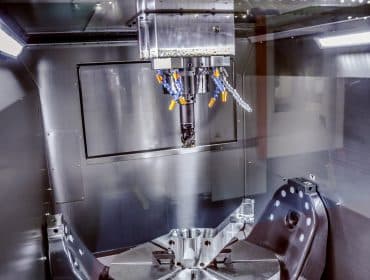
Precision machining is at the heart of what we do, and our CNC machining and turning services deliver exceptional accuracy for parts requiring intricate designs. Our CNC machines are equipped to handle both low and high-volume production, allowing for scalability according to your needs. By employing advanced computer-controlled technology, we achieve precise tolerances for complex parts, making our CNC machining and turning services ideal for applications across various industries, including engineering, defence, and medical technology. -
Spray Painting & Finishing
We understand the importance of a professional, high-quality finish, which is why we offer specialist spray painting services to complete your parts to perfection. Our team applies high-grade, durable coatings, enhancing both the appearance and performance of your components. This service ensures that every item leaving our facility not only looks flawless but is also protected against environmental factors and wear. We can apply custom finishes according to your specifications, meeting both aesthetic and functional requirements.
Workshop Manufacture & Onsite Installation and Commissioning
Most assemblies are manufactured in our own facility, where we have full control over quality and testing, then delivered and commissioned on site. For larger projects, where size or logistics make it impractical to build in the workshop, we can manufacture and commission on site.
We also provide Mechanical & Electrical (M&E) installation for onsite projects. Our engineers work with a range of M&E systems, and handle temporary and permanent installations efficiently, safely and in compliance with safety regulations.
Quality and Environmental Standards
We work in accordance with ISO 9001 (quality) and ISO 14001 (environmental) principles. Our design drawings follow BS 8888.
Frequently Asked Questions
What is CNC prototyping?
CNC prototyping means machining a physical part from your drawing or CAD model, using computer-controlled machining or turning, so it can be tested before you commit to production. Because it’s made in the real material, a CNC prototype can be used to check strength, fit and function, not just appearance.
How long does CNC prototyping take?
It depends on the size and complexity of the part. Smaller CNC machined parts are typically ready within 2–3 days, and fabrication work takes a similar time. For the fastest turnaround, our SLA and carbon fibre 3D printers can produce prototype structural parts and tooling within a day or so, sometimes within hours.
What materials can you machine?
We can machine any material, from aluminium to titanium and Inconel. If you’re unsure which material suits your application, our engineers can advise on material selection.
What file formats do you accept?
Any 2D or 3D format: drawings, PDFs, STEP, IGES, DWG/DXF and native CAD files. If you only have a physical part, we can 3D scan it to an accuracy of 0.1 mm to create a digital model.
How do you test prototypes?
We verify designs with FEA and CFD analysis and cross-check them with hand calculations. We inspect finished parts with 3D scanning accurate to 0.1 mm, and dyno test rotating assemblies. For parts and equipment already in service, we offer condition monitoring.
Do you work with customers across the UK?
Yes. We’re based at Abbey House, 282 Farnborough Road, Farnborough, Hampshire, GU14 7NA, and work with customers across the UK.
Discuss Your Prototype or Production Project
Send us your drawing, CAD model or sample details and tell us what you need: quantity, material, tolerances and timescale. One of our engineers will review it and come back to you promptly with a quote.
Or call 020 7018 1480 or email info@londonmachineworks.com.
Related services: Engineering Design Services · Condition Monitoring · Automation and Robotic Integration · PLC Programming